


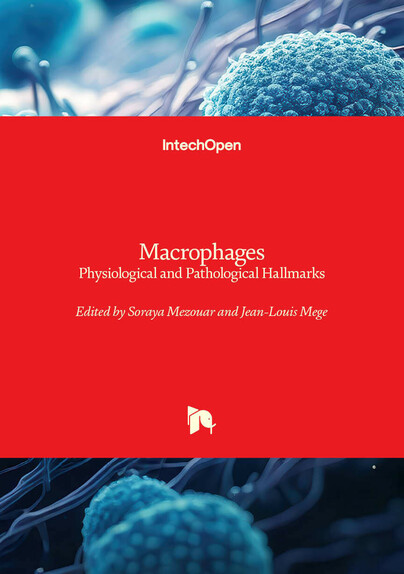
Macrophages (Hardback)
Physiological and Pathological Hallmarks
Imprint: IntechOpen
Pages: 96
ISBN: 9781836352129
Published: 22nd April 2026
 Script Academic & Professional
Pages: 96
ISBN: 9781836352129
Published: 22nd April 2026
Usually available in 6-8 weeks.
You'll be £100.00 closer to your next £10.00 credit when you purchase Macrophages. What's this?
+£4.99 UK Delivery or free UK delivery if order is over £40
(click here for international delivery rates)
Need a currency converter? Check XE.com for live rates
(click here for international delivery rates)
Need a currency converter? Check XE.com for live rates
Macrophages represent a highly dynamic cell population within the innate immune system, engaged in tissue surveillance, phagocytosis, antigen presentation, and the regulation of inflammatory and reparative processes. Their remarkable functional plasticity enables continuous adaptation to microenvironmental cues, defining a spectrum of activation states collectively described by the concept of macrophage polarization. This continuum, historically framed by the pro-inflammatory M1 and anti-inflammatory M2 profiles, encompasses a complex structural and transcriptional heterogeneity tightly linked to physiological and pathological contexts.
This volume provides an integrated analysis of the physiological and pathological functions of macrophages across diverse biological systems, including embryonic development, tissue homeostasis, infection, chronic inflammation, cancer, metabolism, and neurodegenerative diseases. It examines the molecular, metabolic, and epigenetic signals that shape macrophage differentiation and function, while highlighting the intricate interactions between these cells and the immune and stromal components of the microenvironment.
The book also emphasizes contemporary methodologies for exploring macrophage heterogeneity: multiparametric and mass cytometry, single-cell transcriptomics, confocal and intravital imaging, spatial proteomics, targeted metabolomics, high-resolution electron microscopy, and multi-omics integration enhanced by artificial intelligence. These complementary approaches offer new insights into the spatiotemporal dynamics of macrophages, providing avenues for therapeutic strategies based on their functional reprogramming.
As a synthesis of recent advances, this work is addressed to researchers and clinicians interested in macrophage biology, plasticity, and pathophysiological impact, offering a comprehensive and critical perspective on these cells at the intersection of immunity and disease.
Other titles in IntechOpen...






Pen and Sword Books
About Us | Contact Us | Delivery Information | Privacy Policy | Cookies | Affiliates | Terms and Conditions | Backlist | Mailing List | Reward Scheme | Review Request
© Pen and Sword Books Limited 2026. Registered in England No. 2527258.
Registered Office: 47 Church Street, Barnsley, S70 2AS.