"The book is well worth a read and I would highly recommend it."
Read the review [link=https://www.politicshome.com/opinion/article/bambos-charalambous-reviews-cyprus-1974]here[/link]
The House magazine
"The book is well worth a read and I would highly recommend it."
Read the review [link=https://www.politicshome.com/opinion/article/bambos-charalambous-reviews-cyprus-1974]here[/link]
The House magazine
As featured by
Military History Research Group
As featured by
Military History Research Group
“…a genuinely excellent look at lesser known, under appreciated early armored cars, whose usage in the early years of WWII provided quite valuable lessons to the German army.”
Read the full review [link=https://www.amps-armor.org/SiteReviews/ShowReview.aspx?id=25501]here[/link]
AMPS
“…a genuinely excellent look at lesser known, under appreciated early armored cars, whose usage in the early years of WWII provided quite valuable lessons to the German army.”
Read the full review [link=https://www.amps-armor.org/SiteReviews/ShowReview.aspx?id=25501]here[/link]
AMPS
"Like the previous volumes this is a visual feast of high quality and interesting images with accurate and helpful captions. Highly recommended."
FlyPast - June 2026
"Like the previous volumes this is a visual feast of high quality and interesting images with accurate and helpful captions. Highly recommended."
FlyPast - June 2026
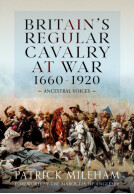
Patrick Mileham’s Britain's Regular Cavalry at War 1660–1920: Ancestral Voices offers a compelling and informative exploration of the development of Britain’s cavalry regiments across more than two and a half centuries. The book clearly explains how individual cavalry regiments gradually came together to form a unified and effective force within the British Army. Mileham provides valuable insight into the distinctive identities of each regiment, highlighting their traditions, organisation, and the unique roles they played in warfare. One of the strengths of the book is its ability to combine historical narrative with an appreciation of the cavalry’s character and heritage. The author carefully examines how the regiments differed from one another while also demonstrating how they worked collectively on the battlefield. As the only branch of the British Army to rely on horses, the cavalry possessed a particular operational flexibility and prestige, which Mileham captures well throughout.. Read more
Colonel (retd) Guy Deacon CBE (late QDG) - Formerly, Colonel Royal Armoured Corps
Patrick Mileham’s Britain's Regular Cavalry at War 1660–1920: Ancestral Voices offers a compelling and informative exploration of the development of Britain’s cavalry regiments across more than two and a half centuries. The book clearly explains how individual cavalry regiments gradually came together to form a unified and effective force within the British Army. Mileham provides valuable insight into the distinctive identities of each regiment, highlighting their traditions, organisation, and the unique roles they played in warfare. One of the strengths of the book is its ability to combine historical narrative with an appreciation of the cavalry’s character and heritage. The author carefully examines how the regiments differed from one another while also demonstrating how they worked collectively on the battlefield. As the only branch of the British Army to rely on horses, the cavalry possessed a particular operational flexibility and prestige, which Mileham captures well throughout.. Read more
Colonel (retd) Guy Deacon CBE (late QDG) - Formerly, Colonel Royal Armoured Corps
Not able to see the embed? You need Adobe Flash Player enabled.
Leadership in War
In this controversial study, Correlli Barnett examines the strengths and weaknesses of twenty wartime leaders in the nineteenth and early twentieth centuries. He considers the extraordinary difficulties they faced, and analyses how they performed and what they achieved. Were they successful, or were they beaten down by the burden of their roles? His… Read more...
“During Desert Storm the Air Force and the Armor forces were the thunder but the 101st was the lightning.” General Norman Schwarzkopf, April, 1991. Camp Eagle II, Saudi Arabia Operation Desert Storm chronicles perhaps the most incredible story of the Gulf War that has never been told. It describes two young soldiers from the intelligence section… Read more...