


Special Offer
Google Books previews are unavailable because you have chosen to turn off third party cookies for enhanced content. Visit our cookies page to review your cookie settings.
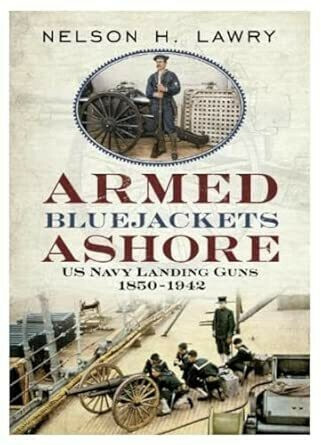
Armed Bluejackets Ashore (Hardback)
US Navy Landing Guns 1850–1942
Imprint: Fonthill
Pages: 320
Illustrations: 153 Integrated b&w images
ISBN: 9781625450821
Published: 30th May 2024
Pages: 320
Illustrations: 153 Integrated b&w images
ISBN: 9781625450821
Published: 30th May 2024
You'll be £26.00 closer to your next £10.00 credit when you purchase Armed Bluejackets Ashore. What's this?
+£4.99 UK Delivery or free UK delivery if order is over £40
(click here for international delivery rates)
Order within the next 3 hours, 28 minutes to get your order processed the next working day!
Need a currency converter? Check XE.com for live rates
(click here for international delivery rates)
Order within the next 3 hours, 28 minutes to get your order processed the next working day!
Need a currency converter? Check XE.com for live rates
Among other major navies, the United States Navy put armed naval landing parties ashore during the nineteenth and early twentieth centuries. Although done primarily to protect American interests, they also safeguarded international communities against the “savage hordes” of “uncivilized” nations. Specially designed light field guns carried aboard gunboats and larger warships sometimes supported the bluejackets and marines, customarily when larger parties more likely to face sharp actions went ashore. Most American naval landings of the nineteenth century took place in Africa, Asia, and Central and South America, whereas the following century saw landings against larger and otherwise civilized nations such as Mexico and Russia. The last of these landings were made in conjunction with the Allied assaults on North Africa in November 1942. The first purpose-built landing guns, the bronze Dahlgren muzzleloading smoothbore howitzers, saw extensive deployment during the Civil War, and postwar in Korea. The USN’s very first steel breechloading guns were landing pieces. Five different marks of 3-inch breechloading guns and several guns of other calibers followed in successive decades, serving for varying times. The history and characteristics of these landing guns are chronicled.
Other titles in Fonthill...







Pen and Sword Books
About Us | Contact Us | Delivery Information | Privacy Policy | Cookies | Affiliates | Terms and Conditions | Backlist | Mailing List | Reward Scheme | Review Request
© Pen and Sword Books Limited 2026. Registered in England No. 2527258.
Registered Office: 47 Church Street, Barnsley, S70 2AS.