


Special Offer
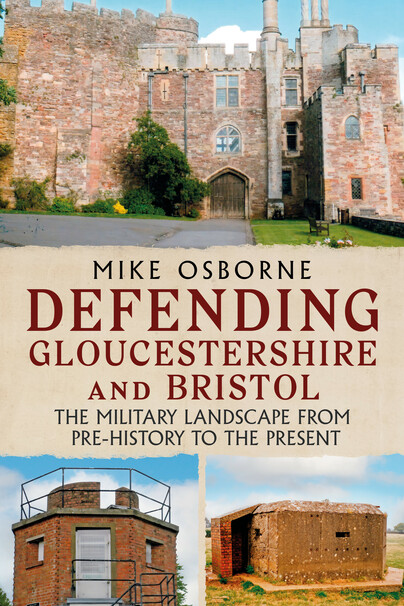
Defending Gloucestershire and Bristol (Paperback)
Imprint: Fonthill
Pages: 256
Illustrations: 103 colour images
ISBN: 9781781558898
Published: 28th February 2024
Pages: 256
Illustrations: 103 colour images
ISBN: 9781781558898
Published: 28th February 2024
You'll be £16.25 closer to your next £10.00 credit when you purchase Defending Gloucestershire and Bristol. What's this?
+£4.99 UK Delivery or free UK delivery if order is over £40
(click here for international delivery rates)
Order within the next 4 hours, 35 minutes to get your order processed the next working day!
Need a currency converter? Check XE.com for live rates
(click here for international delivery rates)
Order within the next 4 hours, 35 minutes to get your order processed the next working day!
Need a currency converter? Check XE.com for live rates
Gloucestershire’s strategic location straddling the Severn is reinforced by Bristol’s importance as a port. The Forest of Dean and the Cotswolds are densely populated by prehistoric hillforts and Gloucester, Cirencester and Winchcombe were important throughout the Roman and Anglo-Saxon periods. The Normans built substantial castles at Bristol, Gloucester and Berkeley, scene of Edward II’s murder, with many more of earth and timber. Many figured in the conflicts between rival factions culminating in the Battle of Tewkesbury. In the Civil War, Bristol underwent two sieges and Gloucester another and one of the last battles, at Stow, followed continuous skirmishing. The next centuries saw volunteer forces established, formalised by the State by the end of Victoria’s reign, to counter threats external and internal. A nascent aircraft industry would develop into aircraft factories and airfields in the First World War with further development of training and aircraft storage facilities for the newly formed RAF during the inter-War period. Anti-invasion defences were constructed in the Second World War, but the primary effort was in logistics: bases for arriving US troops; RAF and USAAF training airfields and depots; and communications facilities. This last aspect, along with intelligence gathering, continued into the Cold War and beyond.
Other titles in Fonthill...




Pen and Sword Books
About Us | Contact Us | Delivery Information | Privacy Policy | Cookies | Affiliates | Terms and Conditions | Backlist | Mailing List | Reward Scheme | Review Request
© Pen and Sword Books Limited 2026. Registered in England No. 2527258.
Registered Office: 47 Church Street, Barnsley, S70 2AS.