


Google Books previews are unavailable because you have chosen to turn off third party cookies for enhanced content. Visit our cookies page to review your cookie settings.
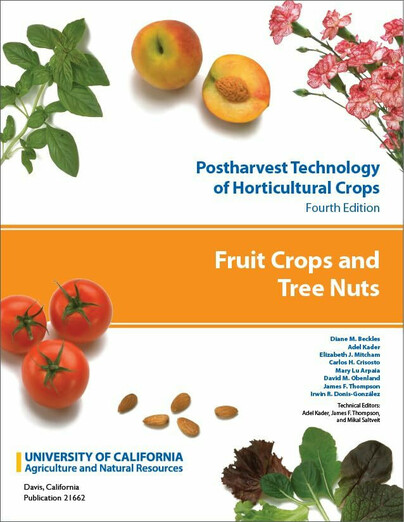
Fruit Crops and Tree Nuts (Paperback)
Postharvest Technology of Horticultural Crops, Fourth Edition
Imprint: University of California Agriculture and Natural Resources
Series: Postharvest Technology of Horticultural Crops
Pages: 164
ISBN: 9781627110655
Published: 1st August 2025
 Script Academic & Professional
Series: Postharvest Technology of Horticultural Crops
Pages: 164
ISBN: 9781627110655
Published: 1st August 2025
Usually available in 6-8 weeks.
You'll be £59.95 closer to your next £10.00 credit when you purchase Fruit Crops and Tree Nuts. What's this?
+£4.99 UK Delivery or free UK delivery if order is over £40
(click here for international delivery rates)
Order within the next 5 hours, 32 minutes to get your order processed the next working day!
Need a currency converter? Check XE.com for live rates
(click here for international delivery rates)
Order within the next 5 hours, 32 minutes to get your order processed the next working day!
Need a currency converter? Check XE.com for live rates
Depending on commodity, cultivar, and handling conditions, about one-third of fresh fruit and vegetables are estimated to be lost or wasted globally. Most loss occurs incidentally, due to lack of adequate infrastructure along the supply chain. When producers and handlers understand the biological and environmental factors involved in product deterioration, they can select proper postharvest techniques to delay senescence (aging of produce) and maintain the best possible quality - while helping reduce the incidence of postharvest loss and waste.
This volume clearly explains biological factors influencing produce degeneration and explores recent trends in perishables handling. Specific chapters address pome fruit, stone fruit, small fruit (berries, grapes, and kiwi), subtropical fruit, tropical fruit, and tree nuts. Handy charts throughout illustrate key concepts such as respiration rate by commodity, climacteric vs. non climacteric fruits, natural production rates of ethylene, cold sensitivity, and air temperature.
The emphasis is on commercially available technologies that have been placed into practice to minimize the losses and maintain food safety. While this volume's perspective is based on the postharvest technology used in California and the United States, the principles discussed are applicable to fresh horticulture crops produced anywhere in the world. The information will be useful to the people who want to learn about or are involved in growing, harvesting, packaging, transporting, or marketing perishable produce.
Other titles in the series...
Other titles in University of California Agriculture and Natural Resources...


Pen and Sword Books
About Us | Contact Us | Delivery Information | Privacy Policy | Cookies | Affiliates | Terms and Conditions | Backlist | Mailing List | Reward Scheme | Review Request
© Pen and Sword Books Limited 2026. Registered in England No. 2527258.
Registered Office: 47 Church Street, Barnsley, S70 2AS.