


New Release
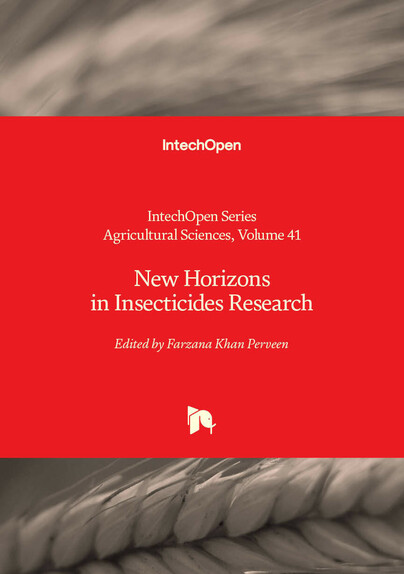
New Horizons in Insecticides Research (Hardback)
Imprint: IntechOpen
Series: Agricultural Sciences
Pages: 96
ISBN: 9781806312658
Published: 24th June 2026
 Script Academic & Professional
Series: Agricultural Sciences
Pages: 96
ISBN: 9781806312658
Published: 24th June 2026
This book will be reprinted and your order will be released in due course.
You'll be £100.00 closer to your next £10.00 credit when you purchase New Horizons in Insecticides Research. What's this?
+£4.99 UK Delivery or free UK delivery if order is over £40
(click here for international delivery rates)
Need a currency converter? Check XE.com for live rates
(click here for international delivery rates)
Need a currency converter? Check XE.com for live rates
This book describes that a pesticide is a substance used to control organisms considered harmful. Pesticides target insect pests, fungi, weeds, and parasitic worms, respectively. Modern agriculture faces a critical dichotomy: the imperative for global food security versus the ecological debt incurred by the inefficiency of conventional agrochemicals. This book explores the ‘Nano-Green Nexus’, a paradigm shift moving from recalcitrant synthetics to biodegradable, nanotechnology-enabled delivery systems. The agriculture sector is one of the largest users of various synthetic (chemical) insecticides. However, extensive use of synthetic (chemical) insecticides has raised significant concerns, including environmental pollution, harm to non-target organisms, the development of pest resistance, and potential health risks to humans. Botanical insecticides, pest control products derived from plants, have become an important environmentally friendly alternative to synthetic (chemical) insecticides. In addition to their environmentally friendly nature, botanical insecticides offer benefits like low toxicity to non-target organisms, biodegradability, and reduced risk of pest resistance. The agriculture sector plays a pivotal role in ensuring food security and contributing to economic stability. Despite its advantages, the widespread use of synthetic pesticides for pest control poses significant threats to human health, environmental quality, and biological control agents. This book highlights the dual nature of pesticides, focusing on their benefits in enhancing crop yields and their adverse impacts on non-target species. Neonicotinoid insecticides (NEOs) have become the most widely used class of insecticides globally since the 1990s, owing to their high insecticidal efficacy, broad spectrum, and low acute toxicity to mammals. However, their widespread application, high water solubility, environmental persistence, and systemic properties have led to ubiquitous contamination in various environmental media, biota, and food products. This book systematically reviews the emission pathways, environmental distribution, and ecological and human health risks associated with NEOs, and summarizes the latest advances in risk-control technologies.
Other titles in the series...
Other titles in IntechOpen...

Pen and Sword Books
About Us | Contact Us | Delivery Information | Privacy Policy | Cookies | Affiliates | Terms and Conditions | Backlist | Mailing List | Reward Scheme | Review Request
© Pen and Sword Books Limited 2026. Registered in England No. 2527258.
Registered Office: 47 Church Street, Barnsley, S70 2AS.