As featured in
Bibliothèque stratégique of VaeVictis - No.184, January/February 2026
As featured in
Bibliothèque stratégique of VaeVictis - No.184, January/February 2026
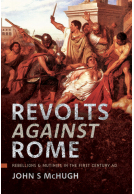
"It's nicely written with the conspirators and loyalists plotting mutinies and ways to dissolve the revolt without killing too many troops or costing too much money. Enjoyed it."
Read the full review [link=https://hmgs.org/blog/2025/12/26/revolts-against-rome-rebellions-and-mutinies-in-first-century-ad/]here[/link]
Historical Miniatures Gaming Society
"It's nicely written with the conspirators and loyalists plotting mutinies and ways to dissolve the revolt without killing too many troops or costing too much money. Enjoyed it."
Read the full review [link=https://hmgs.org/blog/2025/12/26/revolts-against-rome-rebellions-and-mutinies-in-first-century-ad/]here[/link]
Historical Miniatures Gaming Society
[b]Rating[/b]: 5 out of 5 stars I am a Roman history buff of sorts (four years of Latin may have helped). And, I particularly enjoy the period between Augustus and Nero - this could be from enjoying reading I, Claudius (Robert Graves, 1935), 1 Loved Tiberius (Elisabeth Dored, 1959) and watching the 1976 BBC series, I, Claudius. So this book intrigued me and I was thrilled to receive this ARC from NetGalley and the publisher, Pen & Sword. I found the book a delightful read. Not being in the medical field, I enjoyed learning how medicine was conducted in this period of history, learning what Galen and other men of the time handled sickness and disease, and how religion played into the care for the sick and dying. The historical context of the Roman emperors studied in this book was particularly of interest as were the suppositions that many of these men did not die natural deaths but were poisoned. I was particularly intrigued by Caligula (who was the worst of the emperors studied) and by.. Read more
NetGalley, Janine Skavnak
[b]Rating[/b]: 5 out of 5 stars I am a Roman history buff of sorts (four years of Latin may have helped). And, I particularly enjoy the period between Augustus and Nero - this could be from enjoying reading I, Claudius (Robert Graves, 1935), 1 Loved Tiberius (Elisabeth Dored, 1959) and watching the 1976 BBC series, I, Claudius. So this book intrigued me and I was thrilled to receive this ARC from NetGalley and the publisher, Pen & Sword. I found the book a delightful read. Not being in the medical field, I enjoyed learning how medicine was conducted in this period of history, learning what Galen and other men of the time handled sickness and disease, and how religion played into the care for the sick and dying. The historical context of the Roman emperors studied in this book was particularly of interest as were the suppositions that many of these men did not die natural deaths but were poisoned. I was particularly intrigued by Caligula (who was the worst of the emperors studied) and by.. Read more
NetGalley, Janine Skavnak
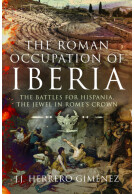
“Drawing on literary and archaeological evidence, Herrero Giménez addresses an extraordinary number campaigns, including many little-known and ill-documented… an immensely importance read for anyone with an interest in the rise of Rome.”
The NYMAS Review
“Drawing on literary and archaeological evidence, Herrero Giménez addresses an extraordinary number campaigns, including many little-known and ill-documented… an immensely importance read for anyone with an interest in the rise of Rome.”
The NYMAS Review
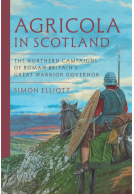
According to Simon Elliott, Gnaeus Julius Agricola was Roman Britain’s greatest warrior governor. Perhaps. It is a bold statement and one that drives Elliott’s analysis in his latest book, Agricola in Scotland. Elliott sets up the imperial context for Agricola’s governorship of Britain, from 77 to 83 CE, while along the way he describes many of the elements behind that fascinating story of conquest. Elliott begins with some Roman history 101, providing general context for the empire and the provinces, particularly Britain. This includes a glossary of key terms used in the book. After a chapter with an overview of the Republic and Principate Empire, Elliott digs into the Roman military system, again working from the most basic level. This covers the Legions and Auxiliaries, their weapons and armour, and the regional fleets. He moves onto a general description of Roman Britain in the later First Century CE, including its geography, which would prove so important in Agricola’s campaigns... Read more
Neil Smith
According to Simon Elliott, Gnaeus Julius Agricola was Roman Britain’s greatest warrior governor. Perhaps. It is a bold statement and one that drives Elliott’s analysis in his latest book, Agricola in Scotland. Elliott sets up the imperial context for Agricola’s governorship of Britain, from 77 to 83 CE, while along the way he describes many of the elements behind that fascinating story of conquest. Elliott begins with some Roman history 101, providing general context for the empire and the provinces, particularly Britain. This includes a glossary of key terms used in the book. After a chapter with an overview of the Republic and Principate Empire, Elliott digs into the Roman military system, again working from the most basic level. This covers the Legions and Auxiliaries, their weapons and armour, and the regional fleets. He moves onto a general description of Roman Britain in the later First Century CE, including its geography, which would prove so important in Agricola’s campaigns... Read more
Neil Smith
Tiberius
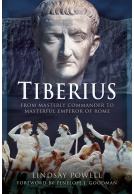
History has not been kind to the memory of Tiberius Caesar (42 BC-AD 37), second emperor of the Romans. His reputation for capable generalship and sensible civic leadership are marred by reports of cruelty, treason trials and sexual depravity. Some historians have described him as a ‘tyrant’ or even a ‘monster’. But does he deserve this negative… Read more...