


Preorder

Google Books previews are unavailable because you have chosen to turn off third party cookies for enhanced content. Visit our cookies page to review your cookie settings.
Textile Production in the Ancient Central Peloponnese (Paperback)
Seen Through the Use of Clay Spools
Imprint: Oxbow Books
Series: Ancient Textiles
Pages: 204
Illustrations: 200 B/W illustrations
ISBN: 9798888570647
Published: 30th November 2026
 Script Academic & Professional
Series: Ancient Textiles
Pages: 204
Illustrations: 200 B/W illustrations
ISBN: 9798888570647
Published: 30th November 2026
You'll be £36.00 closer to your next £10.00 credit when you purchase Textile Production in the Ancient Central Peloponnese. What's this?
+£4.99 UK Delivery or free UK delivery if order is over £40
(click here for international delivery rates)
Order within the next 5 hours, 40 minutes to get your order processed the next working day!
Need a currency converter? Check XE.com for live rates
(click here for international delivery rates)
Order within the next 5 hours, 40 minutes to get your order processed the next working day!
Need a currency converter? Check XE.com for live rates
Used to cover, protect and embellish the body, to furnish the houses and for social display, but also for providing trade and war supplies, such as sails, ropes and tents, textiles have been one of the most essential commodities throughout human history. Despite the major importance of fabrics, only in the last decades have they started to be systematically investigated.
Over time, mainland Greece offered important archaeological evidence for studying cloth production, especially spinning, weaving and textile dyeing. One of the most dynamic and textile-flourishing areas proved to be the Peloponnesian Peninsula, across which textile tools were abundantly unearthed in all sites and layers. With fewer occasions, fabrics preserved as such or in a mineralized or carbonized state were recorded too. However, despite the high diversity of findings, not all the material received scholarly attention.
Therefore, even if in the Aegean archaeology, spindle whorls and loom weights were traditionally examined to learn about textile production and to understand how spinning and weaving were carried out by the ancient Aegean craftspeople, the clay spools that appeared in the region during the Neolithic period, becoming more common in the Bronze Age and disappearing almost completely in the late Hellenistic times, were rarely discussed. Despite their consistent presence in numerous sites throughout the Aegean, they have caught the attention of some researchers in the field only very recently.
This volume focuses on the long-standing presence of clay spools in mainland Greece, discussing in greater detail such finds recorded in the Central Peloponnesian sites. Consistent collections of clay spools from Olympia, Makrysia, Elean Pylos, Lerna, Argos and other sites allowed for an in-debt inquiry of their occurrence, production, use and discard in Elis, Arcadia, Argolid and Corinthian regions, while they are missing from ancient contexts in Achaia, Messenia and Laconia. Special attention is given to their potential function(s), as these tools are closely related to weaving, and were most probably employed in the past as loom weights. Moreover, the presence of spools in domestic contexts, specialized textile workshops, graves and sanctuaries, sometimes next to loom weights and spindle whorls, show their popularity as highly efficient textile tools but also suggest a symbolic meaning of these tiny yet full of significance tools.
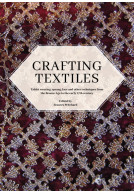
Other titles in the series...



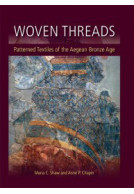

Other titles in Oxbow Books...






Pen and Sword Books
About Us | Contact Us | Delivery Information | Privacy Policy | Cookies | Affiliates | Terms and Conditions | Backlist | Mailing List | Reward Scheme | Review Request
© Pen and Sword Books Limited 2026. Registered in England No. 2527258.
Registered Office: 47 Church Street, Barnsley, S70 2AS.