


Special Offer
Google Books previews are unavailable because you have chosen to turn off third party cookies for enhanced content. Visit our cookies page to review your cookie settings.
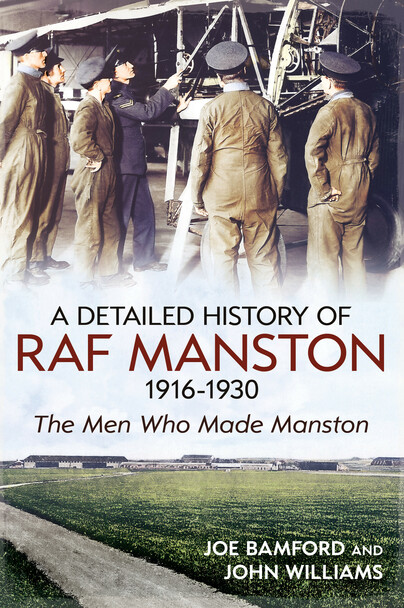
The Detailed History of RAF Manston (Paperback)
1916-1930
Imprint: Fonthill
Pages: 176
Illustrations: 55 Integrated b&w images
ISBN: 9781781550946
Published: 30th December 2013
Pages: 176
Illustrations: 55 Integrated b&w images
ISBN: 9781781550946
Published: 30th December 2013
You'll be £9.50 closer to your next £10.00 credit when you purchase The Detailed History of RAF Manston. What's this?
+£4.99 UK Delivery or free UK delivery if order is over £40
(click here for international delivery rates)
Order within the next 4 hours, 22 minutes to get your order processed the next working day!
Need a currency converter? Check XE.com for live rates
(click here for international delivery rates)
Order within the next 4 hours, 22 minutes to get your order processed the next working day!
Need a currency converter? Check XE.com for live rates
A Detailed History of RAF Manston 1916-1930: The Men Who Made Manston covers the development of aviation in Thanet up to and including the period of the First World War. Manston had its origins in the Royal Naval Seaplane Station at Westgate that was later expanded for landplane operations. The fact that the landing ground at Westgate was both dangerous and unsuitable lead to the development at Manston. Lieutenant Spenser Grey was the first airman to land in Thanet and he began a popular trend with various aviators being attracted to the area. In August 1913, The Daily Mail organised the Round Britain Aeroplane Race that both began and ended at Ramsgate giving a great boost to the town. The first unit to be based at Manston was 3 Wing RNAS that moved from Detling in April 1916 and the first CO was appointed in May. During the war, aeroplanes based at Manston and particularly its 'War Flight' played an important role in defending the Thames and Medway estuaries. Together with RNAS Eastchurch, Manston's War Flight of Triplanes, Camels and Pups patrolled the coast and amongst its most famous moments was when on 22 August 1917, a German Gotha bomber was shot down near Vincent's Farm.The authors give a detailed history of the units that were based at Manston during this period, their operations and the commanding officers. Manston was unique in many ways, but particularly as it was the only airfield to have built an underground hangar for the protection of its aeroplanes. After the First World War, Manston expanded and it took on the role of a training station. This first book in a three-book series will finish approximately at the end of the war period and continue with the growth of the station during the inter-war years.
Other titles in Fonthill...





Pen and Sword Books
About Us | Contact Us | Delivery Information | Privacy Policy | Cookies | Affiliates | Terms and Conditions | Backlist | Mailing List | Reward Scheme | Review Request
© Pen and Sword Books Limited 2026. Registered in England No. 2527258.
Registered Office: 47 Church Street, Barnsley, S70 2AS.