


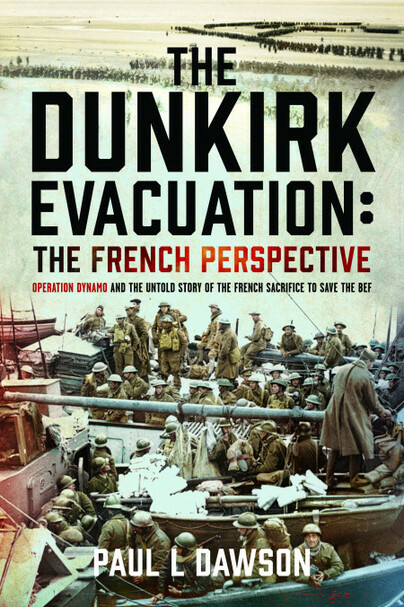
The Dunkirk Evacuation: The French Perspective (Hardback)
Operation Dynamo and the Untold Story of the French Sacrifice to Save the BEF

Pages: 272
Illustrations: 16 mono illustrations
ISBN: 9781036133801
Published: 30th August 2026
(click here for international delivery rates)
Order within the next 9 hours, 22 minutes to get your order processed the next working day!
Need a currency converter? Check XE.com for live rates
Hitler unleashed his Blitzkrieg in the West on 10 May 1940. As German troops advanced, the British Expeditionary Force, the French First Army and the Belgian Army found themselves squeezed into a narrow corridor between Lille and Dunkirk. By 24 May, there were 400,000 soldiers trapped there, with only one chance of survival – to be evacuated.
Somehow, the beleaguered Allied troops had to hold off the might of the German forces long enough for the bulk of the British, French and Belgian soldiers to be saved. Day after day the Germans attacked the defensive perimeter, but the defenders hung on. ‘Even in defeat’, wrote a German commander on 29 May, ‘the French fight like lions … the BEF is in complete disintegration. It has simply deserted all its vehicles and equipment and is fleeing to the sea.’
As the troops were lifted from the beaches and Dunkirk harbour, fewer and fewer men were left to defend the thinning and shrinking perimeter, one whole sector of which was manned by French troops. Finally, as the last ship departed from Dunkirk on 4 June, around 40,000 French troops were all that remained holding the line.
Finally, at 08.00 hours on 4 June, German troops reached the French naval headquarters in Dunkirk. It was there that General Barthélemy formally surrendered. ‘No episode in the epic of Dunkirk,’ wrote the French historian of the battle, ‘caused more heartbreak’, as the brave defenders of Dunkirk marched into captivity. Their sacrifice was noted by Churchill, who recognised that, ‘These troops thus made a splendid contribution to the safety of their more favoured comrades and the British Expeditionary Force.’
Using archival sources in France and Belgium, much of which has not been previously published in English, Paul Dawson throws fresh light on a little-known aspect of one of the most famous episodes of the Second World War. Had it not been for the sacrifices of the French troops, Britain’s situation in the summer of 1940, as Hitler’s forces bore down on the Channel coast, might have been far more precarious.
There are no reviews for this book. Register or Login now and you can be the first to post a review!
About Paul L. Dawson
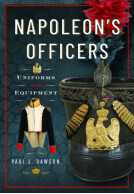
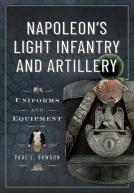
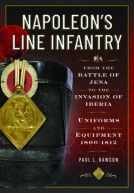
Paul L. Dawson BSc Hons MA MIFA FINS, is a historian and author, specialising in the French Army of the Napoleonic War. In addition, as a noted equestrian, this allows him to have a greater understanding of what was and what was not possible for cavalry and other troops which utilised horses. Working as a historical tailor producing museum-quality replica clothing gives him a unique insight into construction techniques of the period, as well the knowledge and ability to decipher documents from the period.
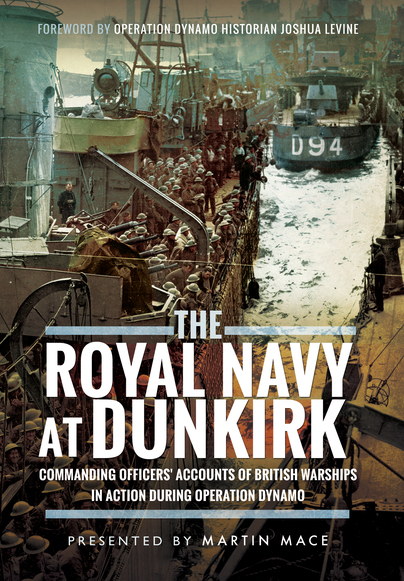
The fact that the British Expeditionary Force was evacuated from Dunkirk in May-June 1940 has achieved the status of a legend. Whilst the part played by the 'Little Ship's in that miracle is equally well-known, the role of the Royal Navy's warships – the destroyers, minesweepers and personnel ships – is often overlooked. Indeed, more than 300,000 troops out of a total of 338,226, were evacuated from the harbour at Dunkirk in these vessels. In the weeks after Operation Dynamo, the Admiralty issued an order requiring the Commanding Officers of those British warships involved to submit a report…
By Martin MaceClick here to buy both titles for £35.00


Pen and Sword Books
About Us | Contact Us | Delivery Information | Privacy Policy | Cookies | Affiliates | Terms and Conditions | Backlist | Mailing List | Reward Scheme | Review Request
© Pen and Sword Books Limited 2026. Registered in England No. 2527258.
Registered Office: 47 Church Street, Barnsley, S70 2AS.