


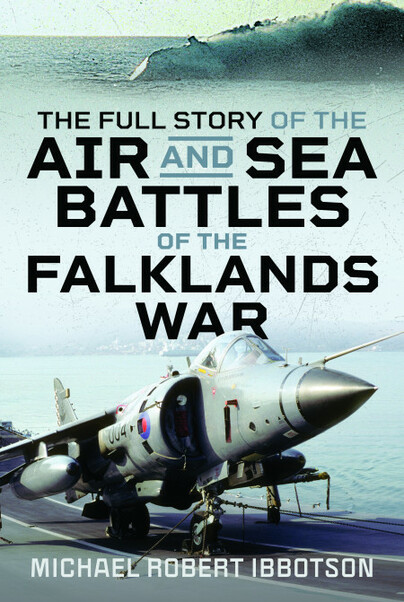
The Full Story of the Air and Sea Battles of the Falklands War (Hardback)
Imprint: Pen & Sword Military
Pages: 280
Illustrations: 25 mono illustrations
ISBN: 9781036148515
Published: 3rd March 2026
(click here for international delivery rates)
Order within the next 10 hours, 27 minutes to get your order processed the next working day!
Need a currency converter? Check XE.com for live rates
| Other formats available | Price |
|---|---|
| The Full Story of the Air and… eBook (23.1 MB) Add to Basket | £14.99 |
Despite the Falklands War between Argentina and the UK lasting only ten weeks, it still had an enduring impact on military technology worldwide. Not since the Second World War had two capable navies and air forces clashed in open ocean. In a logistical master class, the British mustered 115 ships with no warning and sent them 8,000 miles south within days/ weeks. They initiated their campaign by sinking a large Argentine warship with a nuclear-powered submarine (SSN); the only time this has happened.
It was also the first time that sea-skimming anti-ship missiles dominated naval tactics. In addition to this, the British launched an amphibious landing in the jet era, with only 28 serviceable Harrier fighters against 112 fighter jets – it was also the first time air-to-air combat depended entirely on a fighter aircraft capable of vertical take-off and landing (the Harrier). On the first day of Britain’s recovery effort, an RAF Vulcan bomber dropped twenty-one bombs to get one on target. After considerable ‘research under fire’, on the war’s last full day an RAF Harrier dropped a single laser guided bomb and scored a bullseye. As such, the war marks an important transition in British aviation technology.
While both sides had six ships sunk, the British use of SSNs forced the entire Argentine navy to retreat to port. High British ship losses remain controversial, and they are compared here with losses in Operation Pedestal, the long-range naval action on a similar scale to save Malta in the Second World War. Losses were overall lower in the Falklands War, and the reasons behind this are discussed. The book also reveals what might have happened if the Argentine dictators had launched their war several months later, as originally considered.
Register or Login now to post a review!
As featured by
The Naval Review
"This detailed and well written account tells the story of this brief but intense war concentrating on the maritime battle and the associated air operations."
FlyPast - June 2026
"The author has assembled a well-balanced overview with due focus being given to both belligerents, including personal accounts that bring the narrative to life...there is much to applaud here, as this book highlights the intensity and danger faced by seamen and airmen from both sides."
Britain at War
"For me this book is of interest since it is a recently written text which is not a personal memoir."
Army Rumour Service Book Club
4 Stars
Read the full review here
As featured by
Military History Research Group
Read the full review here
Flying in Ireland
"Did I learn anything new? Yes indeed. The maps and diagrams are also most useful."
Ulster Aviation Society
About Michael Robert Ibbotson
Michael Ibbotson is a professor of neuroscience and biomedical engineering at the University of Melbourne and an ex-infantryman. His other academic interest is military history and he revelled at the opportunity to write a book based on the memories of his uncle, who was a member of the Guards Armoured Division in the Second World War. With his academic training, he has created an account through the use of interviews, archival research and technical knowledge that portrays a unique soldier’s perspective on well-known battles.


Pen and Sword Books
About Us | Contact Us | Delivery Information | Privacy Policy | Cookies | Affiliates | Terms and Conditions | Backlist | Mailing List | Reward Scheme | Review Request
© Pen and Sword Books Limited 2026. Registered in England No. 2527258.
Registered Office: 47 Church Street, Barnsley, S70 2AS.