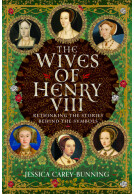
[b]Rating[/b]: 5 out of 5 stars A new voice on the Tudor scene, bringing a fresh and welcome perspective. We all think we "know" the six wives of Henry VIII. But we know very little about their views, how they saw their regal roles, and their actual stance on religion beyond being labelled Catholic or Protestant. I like how Carey-Bunning develops a couple of key themes for each queen. For Catherine of Aragon (using the author's spellings of the queens' names) how her upbringing and knowledge at a very young age that she would be queen of England dictated her refusal to relinquish her throne and marriage. For Anne Boleyn, how her choice of headwear suggests how she felt about her Royal role. How popular with the people was Jane Seymour? The terrible challenges facing Anna of Cleves, unable to speak English, unfamiliar with the court and most importantly, knowing nothing about her husband. We all think she emerged relatively unscathed after just 7 months of marriage, but her settlement was.. Read more
NetGalley, Gail Hanlon
[b]Rating[/b]: 5 out of 5 stars A new voice on the Tudor scene, bringing a fresh and welcome perspective. We all think we "know" the six wives of Henry VIII. But we know very little about their views, how they saw their regal roles, and their actual stance on religion beyond being labelled Catholic or Protestant. I like how Carey-Bunning develops a couple of key themes for each queen. For Catherine of Aragon (using the author's spellings of the queens' names) how her upbringing and knowledge at a very young age that she would be queen of England dictated her refusal to relinquish her throne and marriage. For Anne Boleyn, how her choice of headwear suggests how she felt about her Royal role. How popular with the people was Jane Seymour? The terrible challenges facing Anna of Cleves, unable to speak English, unfamiliar with the court and most importantly, knowing nothing about her husband. We all think she emerged relatively unscathed after just 7 months of marriage, but her settlement was.. Read more
NetGalley, Gail Hanlon
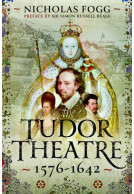
This book provides a lot of interesting background for the famous people and plays in the early English theatre. Shakespeare, Marlowe, Burbage, and Jonson are just a few of the many playwrights and actors - the sheer numbers of playwrights, actors (including children but not women), managers, owners, plays, and theatres are quite remarkable, although most of the plays don't seem to have survived. What is even more remarkable is how the theatre itself survived; right from the start it was under attack from in-fighting, lawsuits, the plague, and the Puritans. Nicholas Fogg puts the development of the theatre in the context of society, politics, the aristocracy, and the royal court and shows in a very entertaining way how it survived one crisis after another until it was finally shut down in 1642 by Puritans who had become powerful in Parliament as Charles I gradually lost his grip on the country. Although the theatre started in the reign of Elizabeth Tudor, approximately half the book deals.. Read more
NetGalley, Yvonne Strong
This book provides a lot of interesting background for the famous people and plays in the early English theatre. Shakespeare, Marlowe, Burbage, and Jonson are just a few of the many playwrights and actors - the sheer numbers of playwrights, actors (including children but not women), managers, owners, plays, and theatres are quite remarkable, although most of the plays don't seem to have survived. What is even more remarkable is how the theatre itself survived; right from the start it was under attack from in-fighting, lawsuits, the plague, and the Puritans. Nicholas Fogg puts the development of the theatre in the context of society, politics, the aristocracy, and the royal court and shows in a very entertaining way how it survived one crisis after another until it was finally shut down in 1642 by Puritans who had become powerful in Parliament as Charles I gradually lost his grip on the country. Although the theatre started in the reign of Elizabeth Tudor, approximately half the book deals.. Read more
NetGalley, Yvonne Strong
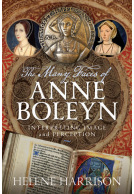
[b]Rating[/b]: 5 out of 5 stars This was an incredibly interesting book. Harrison clearly put years of extensive research into examining Anne Boleyn's life and how she influenced her own image, as well as how history remembers Boleyn. Each chapter examines how Anne Boleyn's image has been created and shaped over time. I found the chapter examining the was that Anne actively took a role in creating her own image during her brief tenure as Queen of England particularly fascinating, as in some biographies it does feel as though Anne's agency does not shine through as much as admirers of her would like. The sections of Anne on the stage and on the big and small screen were also very interesting. The way that she was depicted in plays during the Restoration Period was entirely new information, and I found it particularly fascinating to see how Anne's story was used as an analogy for the succession crisis that broke out around James II's potential accession after his brother Charles... I really.. Read more
NetGalley, Shana Needham
[b]Rating[/b]: 5 out of 5 stars This was an incredibly interesting book. Harrison clearly put years of extensive research into examining Anne Boleyn's life and how she influenced her own image, as well as how history remembers Boleyn. Each chapter examines how Anne Boleyn's image has been created and shaped over time. I found the chapter examining the was that Anne actively took a role in creating her own image during her brief tenure as Queen of England particularly fascinating, as in some biographies it does feel as though Anne's agency does not shine through as much as admirers of her would like. The sections of Anne on the stage and on the big and small screen were also very interesting. The way that she was depicted in plays during the Restoration Period was entirely new information, and I found it particularly fascinating to see how Anne's story was used as an analogy for the succession crisis that broke out around James II's potential accession after his brother Charles... I really.. Read more
NetGalley, Shana Needham
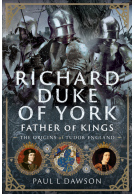
This is definitely worth a read if you’re interested in the lead up to the War of the Roses. There were a lot of cool, obscure letters that I’d never read before, and Paul Dawson makes a decent case that the Duke of York had a more genuine claim to the throne than King Henry VI who was trying to stabilize the government at first, not usurp it
NetGalley, Hadley Field
This is definitely worth a read if you’re interested in the lead up to the War of the Roses. There were a lot of cool, obscure letters that I’d never read before, and Paul Dawson makes a decent case that the Duke of York had a more genuine claim to the throne than King Henry VI who was trying to stabilize the government at first, not usurp it
NetGalley, Hadley Field
I really enjoyed this book. British history lovers take note: don't miss this.
NetGalley, Janine Skavnak
I really enjoyed this book. British history lovers take note: don't miss this.
NetGalley, Janine Skavnak