


New Release
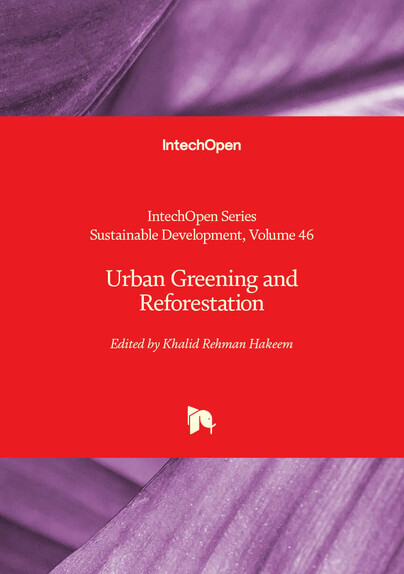
Urban Greening and Reforestation (Hardback)
Imprint: IntechOpen
Series: Sustainable Development
Pages: 180
ISBN: 9781836358817
Published: 24th June 2026
 Script Academic & Professional
Series: Sustainable Development
Pages: 180
ISBN: 9781836358817
Published: 24th June 2026
This book will be reprinted and your order will be released in due course.
You'll be £119.00 closer to your next £10.00 credit when you purchase Urban Greening and Reforestation. What's this?
+£4.99 UK Delivery or free UK delivery if order is over £40
(click here for international delivery rates)
Need a currency converter? Check XE.com for live rates
(click here for international delivery rates)
Need a currency converter? Check XE.com for live rates
In an age of rapid urbanization and intensifying climate change, cities face profound environmental challenges, including urban heat islands, deteriorating air quality, biodiversity loss, increased flooding risks, and diminished human well-being. Urban greening and reforestation emerge as vital nature-based solutions to build resilient, sustainable, and livable urban ecosystems.
This open-access volume, Urban Greening and Reforestation, compiles cutting-edge research and practical insights from leading international experts in urban ecology, plant science, forestry, environmental planning, and related fields. Edited by Khalid Rehman Hakeem, Professor of Biological Sciences at King Abdulaziz University, Jeddah, Saudi Arabia, a distinguished researcher with extensive expertise in plant stress physiology, biotechnology, and phytoremediation, the book presents a multidisciplinary perspective on transforming urban landscapes.
The chapters investigate innovative strategies such as large-scale urban afforestation, mangrove rehabilitation in coastal urban areas, vertical greening systems including green roofs and walls, integration of native species to enhance biodiversity, ecosystem-based adaptation for climate resilience, community-driven initiatives, and green infrastructure planning. These approaches not only mitigate carbon emissions, purify air, manage stormwater, and provide cooling effects but also support wildlife habitats, improve mental and physical health for residents, and promote social equity in green space access.
While acknowledging persistent challenges, such as limited land availability, funding constraints, maintenance requirements, species selection in harsh urban conditions, and ensuring equitable distribution, the book emphasizes interdisciplinary collaboration, policy integration, community engagement, and adaptive management to overcome barriers and achieve long-term success.
Ultimately, this work serves as a comprehensive resource for policymakers, urban planners, researchers, landscape architects, and practitioners, offering evidence-based guidance to advance greener, healthier, and more equitable cities in alignment with global sustainability goals.
Other titles in the series...
Other titles in IntechOpen...


Pen and Sword Books
About Us | Contact Us | Delivery Information | Privacy Policy | Cookies | Affiliates | Terms and Conditions | Backlist | Mailing List | Reward Scheme | Review Request
© Pen and Sword Books Limited 2026. Registered in England No. 2527258.
Registered Office: 47 Church Street, Barnsley, S70 2AS.