


Google Books previews are unavailable because you have chosen to turn off third party cookies for enhanced content. Visit our cookies page to review your cookie settings.
Weaponeering, Fourth Edition (Hardback)
Two-Volume Set
Imprint: American Institute of Aeronautics and Astronautics
Series: AIAA Education Series
Pages: 888
ISBN: 9781624107511
Published: 19th December 2025
 Script Academic & Professional
Series: AIAA Education Series
Pages: 888
ISBN: 9781624107511
Published: 19th December 2025
Usually available in 6-8 weeks.
You'll be £222.00 closer to your next £10.00 credit when you purchase Weaponeering, Fourth Edition. What's this?
+£4.99 UK Delivery or free UK delivery if order is over £40
(click here for international delivery rates)
Order within the next 5 hours, 24 minutes to get your order processed the next working day!
Need a currency converter? Check XE.com for live rates
(click here for international delivery rates)
Order within the next 5 hours, 24 minutes to get your order processed the next working day!
Need a currency converter? Check XE.com for live rates
The primary objective of Weaponeering, Fourth Edition is to assist those engaged in assessing the effects of conventional weapons to understand the components, limitations and techniques needed to perform that assessment. The intent is to explain the underlying methodologies behind various weaponeering tools rather than how to use the tools themselves.
A comprehensive two-volume set, it consists of Weaponeering: An Introduction, Fourth Edition, Volume 1 and Advanced Weaponeering, Fourth Edition, Volume 2, featuring 36 newly updated and organized chapters and two appendices of authoritative information that guides the reader from introductory through advanced concepts. These volumes may also be purchased individually.
These books describe the principal methods used by the Joint Munitions Effectiveness Manual (JMEM) to predict the probability of successfully attacking ground targets using air launched or ground launched weapons. Air launched weapons include guided and unguided bombs, air-to-ground missiles, laser, and GPS guided weapons, rockets, and guns. Surface engagements will cover both direct and indirect fire weapons. A chapter on anti-air weapons effects is also included, which involves airborne targets attacked with air- or ground-based threats. The author outlines the various methodologies used in operational products of the Joint Technical Coordinating Group for Munitions Effectiveness (JTCG/ME) including JMEM Weaponeering Systems (JWS) that are widely used in the U.S. Army, Navy, Air Force and Marine Corps, as well as military services in some other countries.
Weaponeering: An Introduction, Volume 1, covers the basic materials needed to compute the damage to a target by conventional kinetic weapons – trajectory, accuracy, warhead lethality and target vulnerability. In addition, a methodology is needed to calculate a numerical value of target damage. Once the basics are understood, the book addresses typical targets of concern to the warfighter including vehicles, personnel, bridges, buildings and underground bunkers, airblast and collateral damage. Several examples of real-world scenarios supplement the individual chapters to illustrate the application of the material covered. To generate target damage estimates, an unclassified computer program is provided that implements most of the methods described in Volume 1. This is supplemented by a database approved by the JTCG/ME for educational purposes so that several case studies of realistic attacks can be evaluated.
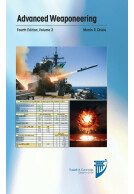
Advanced Weaponeering, Volume 2 begins by providing a more in-depth explanation of the basic methods of Volume 1, allowing a wider range of weapons and targets to be analyzed. This is then followed by topics which though important to most weaponeers, may not be required by the warfighter to address most of the conventional targets of interest. Examples of such topics include projectile ballistics, moving targets, aimpoint optimization, mines and target acquisition. These subjects generally require a deeper level of mathematics to understand the processes involved.
Other titles in the series...
Other titles in American Institute of Aeronautics and Astronautics...

Pen and Sword Books
About Us | Contact Us | Delivery Information | Privacy Policy | Cookies | Affiliates | Terms and Conditions | Backlist | Mailing List | Reward Scheme | Review Request
© Pen and Sword Books Limited 2026. Registered in England No. 2527258.
Registered Office: 47 Church Street, Barnsley, S70 2AS.