


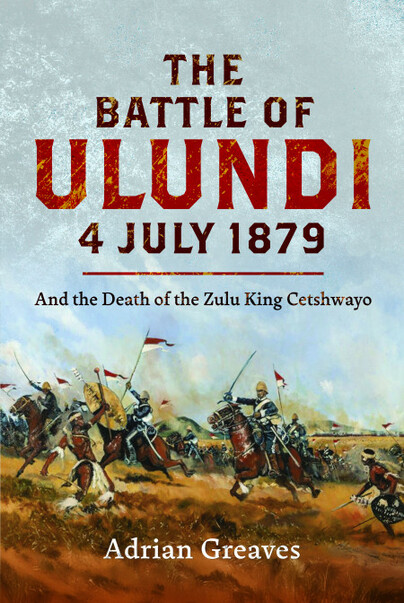
The Battle of Ulundi, 4 July 1879 (Hardback)
and the Death of the Zulu King Cetshwayo
Imprint: Pen & Sword Military
Pages: 200
Illustrations: 20 mono illustrations
ISBN: 9781036141790
Published: 3rd July 2026
(click here for international delivery rates)
Order within the next 5 hours, 39 minutes to get your order processed the next working day!
Need a currency converter? Check XE.com for live rates
In 1879 Britain was at the height of its power when her forces in South Africa unexpectedly invaded neighbouring Zululand. The Zulu king, Cetshwayo, fought back and swiftly defeated the invading troops, firstly at Isandlwana (the defence of Rorke’s Drift notwithstanding) then Ntombe and Hlobane. It was only at Khambula that the British scored their first significant victory, restoring their confidence sufficiently for a renewed invasion that brought the opposing armies to Ulundi for the decisive clash of the war. The Zulus were defeated after a savage battle yet the British press and public, used to victories, showed less interest in the fight itself than in the subsequent fate of Cetshwayo, who was subsequently captured. His kingdom was divided into thirteen quarrelling chiefdoms and his cattle seized, destroying Zululand’s economy. In 1882 Cetshwayo was taken to England to meet Queen Victoria, who demanded his return to Zululand but only to a single chiefdom.
Adrian Greaves offers a detailed account of the Ulundi campaign and of the battle itself, laced with insights from his knowledge of the terrain. He then continues his fascinating narrative with the events of Cetshwayo’s capture and release, and the subsequent Zulu civil war in which he was again defeated in battle. The tragic conclusion sees the fugitive former king fleeing to British protection but dying shortly after from poison. He was buried at a point most difficult for his followers to reach – today a Zulu shrine.
There are no reviews for this book. Register or Login now and you can be the first to post a review!
About Dr Adrian Greaves
In 1960 Adrian Greaves joined up as a Private soldier. A year later aged seventeen, he was selected for officer training and was commissioned into the Welch Regiment. Stationed in Berlin for three years he witnessed the Wall being built, undertook border patrols and once being taken hostage at gunpoint by East German Police. As this book reveals, Albert Speer, who befriended him, taught him German to interpreter level. He met international leaders including Kennedy and Khrushchev.
After leaving the Army he joined Kent Police achieving high rank. His hobbies included mountaineering and he and two friends successfully climbed the Eiger north wall. In 1984 he led an armed police team to quell a violent mutiny on a tanker in the English Channel.
A qualified clinical psychologist, he has over twenty published titles, many with Pen and Sword including Forgotten Battles of the Zulu War (shortly to be re-issued)


Pen and Sword Books
About Us | Contact Us | Delivery Information | Privacy Policy | Cookies | Affiliates | Terms and Conditions | Backlist | Mailing List | Reward Scheme | Review Request
© Pen and Sword Books Limited 2026. Registered in England No. 2527258.
Registered Office: 47 Church Street, Barnsley, S70 2AS.